
Reviews

“Uncountable Spheres” – MEDIA QUOTES & ALBUM REVIEWS (JAN, FEB 2024)
——-
“the masterfully meticulous Uncountable Spheres” – Mark Druery, Indie Shark
indieshark.com/music-reviews/marbyllia-uncountable-spheres-lp/
“I don’t think you’re going to hear anything like Uncountable Spheres no matter how far and wide you scan the underground section of your local record store this month.” – Trace Whittaker, Popicon
popiconmagazine.com/music/marbyllia-release-uncountable-spheres/
“Simply put, this is top-notch listening for experimental fans of all stripes”. Heather Savage, Top Buzz Magazine
topbuzzmagazine.com/music/marbyllias-uncountable-spheres/
“This duo is the real article, which isn’t easy to come by anymore on either side of the pop music universe” – Mindy McCall, Indie Pulse Music
indiepulsemusic.com/2024/02/18/margaret-maria-and-bill-gilliam-marbyllia-record-new-music/
“For those of us who demand quality that’s a cut above in our ambient beats, this is a sound arriving at the perfect moment this late winter. I love what I hear in this album, and something tells me you will too.” – Garth Thomas, Hollywood Digest
thehollywooddigest.com/uncountable-spheres-by-canadas-marbyllia/
“The two improvisors push the limits of each other: Gilliam’s extensive range of sounds from his piano and Maria’s extended cello technique and unusual sound makers. The track Stratosphere in Distress is a solid representation of this dynamic team”. – Cheryl Ockrant, TheWholenote
www.thewholenote.com/index.php/booksrecords2/jazzaimprovised/33233-uncountable-spheres-goddess-of-edges-margaret-maria-bill-gilliam
“Outside The Maze” – album reviews (FEB 2022)
Featuring Bill Gilliam (piano), Eugene Martynec (electroacoustics), Bill Mcbirnie (flute)
The quality that most separates Outside the Maze from the norm is its once-in-a-lifetime idiosyncratic chemistry and synergy. No other three musicians could collaborate in such a way and achieve such remarkable results in such an unusual instrumental configuration. Bill Gilliam, Eugene Martynec, and Bill McBirnie hit a higher creative zenith than ever before with this usual collection. HEATHER SAVAGE (Top Buzz Magazine)
——-
Bill Gilliam, Eugene Martynec and Bill McBirnie’s improv approach in this trio format is an unmitigated success, thanks to the musician’s willingness to take chances, listen to each other, and respond accordingly. All three are without doubt virtuosos. McBirnie’s flute, Martynec’s electroacoustics, and Gilliam’s piano speak directly to listeners without ever sacrifcing their artistic self respect or losing the listener. They…check their egos at the door and play as one…Outside the Maze defies description!…COLIN JORDAN (Medium.com)
——-
These are not traditional compositions, but rather the result of inspired improvisation that clearly avoids any of the self-indulgent nonsense that you might associate with working in such a way. It never sounds slapdash. Rather, it boasts real polish, without ever sounding wayward…It is impressive how seamlessly it all comes together…They make coherence a top priority. Balancing all of these competing elements in a free-flowing framework is a real eye opener…A spellbinding release!NICOLE KILLIAN (The Mob’s Press)
——-
Outside the Maze, consists of ten diverse tracks, no two of which alike. While the piano and the flutes (both C and alto) are pretty much distinguishable throughout, Martynec’s contributions range from atmospheric to percussive. At times, it is hard to imagine that his convincing sounds are not being created on physical drums and cymbals; at others it’s hard to imagine what their origins might be. It’s also hard to imagine that these cohesive “compositions” are being created spontaneously in real time, without premeditation or formal structure. The results are entrancing. DAVID OLDS (Editor’s Choice, WholeNote Magazine)
——-
Those who are inclined to dismiss instrumental music driven by piano and flute as easy-listening tripe will do well to give the new release from Gilliam/ Martynec/ McBirnie, Outside the Maze, a close listen. The trio enlarges the possibilities of instrumental music in ways that will surely surprise and delight even the most cynical listener…It is evocative and accessible, and without ever flaunting its musically iconoclastic approach…It’s all an impressive mix of the familiar and the improbable that works, from beginning to end…They manage to achieve a near orchestral quality, portraying something that approaches the endless expanse of space…These are musicians who, rather than adhering to the status quo, take real chances—and they produce a result that is one of the most offbeat, yet enduring, instrumental releases in recent memory. MARK DRUERY (IndieShark Music Magazine – Pick of the Week –Nomination for Album of the Year)
——-
In collaboration with electroacoustic player Eugene Martynec and piano player Bill Gilliam,[McBirnie’s] recent output ranks among the finest in his career. Together, they create spontaneous compositions relying on little else beyond their innate interplay to make the performances work…It all seizes upon the moment without pretension…Even the most skeptical listener will be entranced by their power. CHADWICK EASTON (Melody Maker Magazine)
“Light Through DARK” – album reviews (FEB 2022)
Featuring Bill Gilliam (piano), Eugene Martynec (electroacoustics), Bill Mcbirnie (flute)
“Light Through Dark”
Bill Gilliam; Bill McBirnie; Eugene Martynec
Independent (gilliammcbirniemartynec.bandcamp.com/releases) Nov 2021. Review by Andrew Timar, The WholeNote, Nov 2021
“It’s clear from the first of the seven tracks of Light Through Dark that the Toronto trio of pianist Bill Gilliam, flutist Bill McBirnie and Eugene Martynec on electroacoustics possesses big ears and hearts. Each, however, has different roots. One of the city’s top jazz and Latin flute specialists, McBirnie is renowned for his outstanding technique as much as for exceptional improvising chops in bebop, swing and Latin idioms. Gilliam has been active in town since the 1980s as a composer and pianist exploring in his words the “boundaries between new music, improvisation, electroacoustic music and contemporary jazz.” Martynec on the other hand has been on the scene as guitarist and record producer for even longer. He’s mostly focused today on performing live interactive electroacoustic music with other improvisers. Both Gilliam and Martynec are core members of the Toronto Improvisers Orchestra.
The moody and languid opener Time Floats – Japanese Suite, Part 1 centres on McBirnie’ slow metal alto flute melodies in which he tastefully introduces shakuhachi (Japanese bamboo flute) nuances into its warm breathy vibrato. Martynec chooses harp, koto and mbira-sounding timbres to weave around the flute throughline, while Gilliam complements with seamlessly effective keyboard work. The other two parts of the Japanese Suite, Icy Still and Crane Flight, continue the shakuhachi theme and sonic imagery. Collectively the trio’s music is inventive, technically adroit and elegant at the same time. Most of all, we can hear their “mutual fascination with the mystery of creating entirely spontaneous music,” as aptly stated in the liner notes”.
“Counterstasis – Refracted Voices”, CD Full Review, Sept 2019
“Throughout the proceedings, Gilliam, Hall and Sorbara play with maturity, confidently committing themselves to the realization of a shared musical vision that privileges communication over individual athletics. The album offers many highlights, but is best heard in one listen, as the spontaneously composed event that it is.”
Colin Story, The WholeNote, Sept 2019.
“I was fortunate to catch a couple of sets by Counterstasis, an excellent improvising Trio led by pianist Bill Gilliam at Array Space, Toronto. The trio plays “spontaneous compositions”, which in essence is a form of improvisation that is characterized by a high level of musical engagement with one another and emergent forms. It gives the listening experience a certain coherence and also conveys an emotional depth. The Trio are masterful improvisers that draw on the jazz and new music genres.”
Dave Kaufman, jazz critic, Sept 2019.
“Entangled Pathways”, CD Reviews, 2021
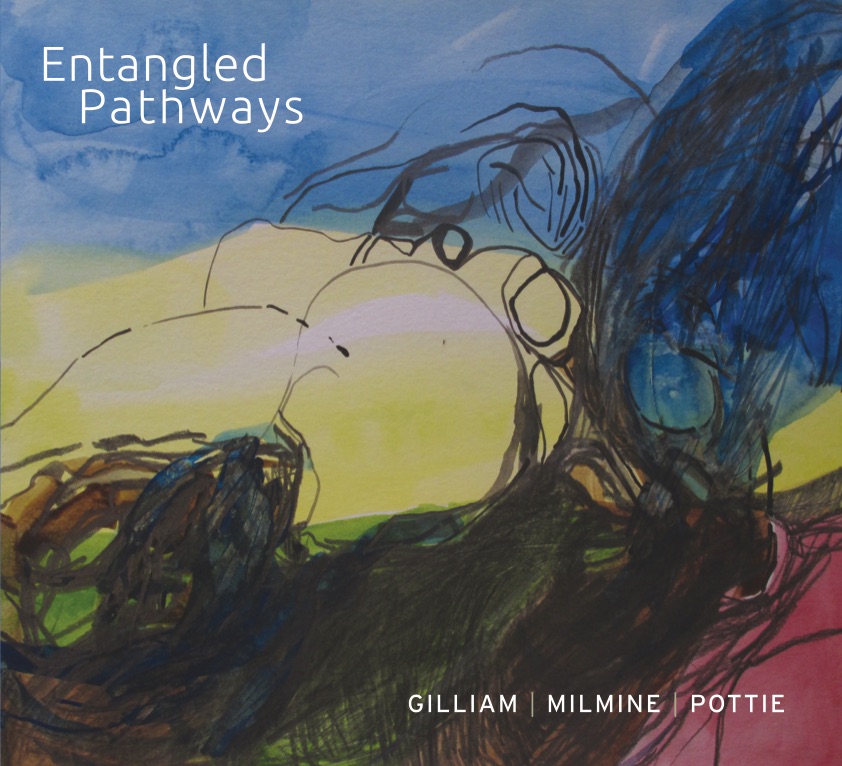
Josh Grossman, the TD Toronto 2018 Jazz Festival artistic director presented our trio’s CD and performance at the festival as:
“Three important contributors to Toronto’s improvised music community – Bill Gilliam (piano), Kayla Milmine (soprano saxophone) and Ambrose Pottie (drums) – combine in this trio. While their exploration of free improvisation is impressive, what hooked me was the composing – their interesting melodies always create a home base from which the soloing departs and, ultimately, returns”
“Pick of the week” – Avant Music News (AMN), Nov 17, 2017
“The Singularity is well-placed in the program, as it seems to portend the sonic and emotional musical journey ahead. Gilliam’s lush, powerful and insistent piano lines are both appealing and unnerving, and Milmine’s commitment to this extraordinary and technically challenging music is evident with every note that she plays – she bends that piece of cold metal to her will, and makes it sing. Mountain Dance is a standout. One of the most visual and rhythmically complex pieces on the CD, the action is propelled by Pottie, who remains completely musical while deftly driving the trio into the nether regions.”
Lesley Mitchell-Clarke, The WholeNote “Entangled Pathways” CD review, Nov 28, 2017
“Bringing together three highly-flexible improvisers, this trio can show hints of melodic tunefulness alongside a collective will to derail those same instincts and head for thornier ground” – Joe Strutt, Mechanical Forest, Oct 2017.
Lamentations – film score review – TIFF The Review, Sep 2017
Jesse Cummings (TIFF): “I’d love to know more about your approach to music, particularly Bill Gilliam’s electronic score, which strikes me as ahead of its time for 1985”.
Bruce Elder: “He (Bill) was also wonderfully able to create a dialogue between more “traditional” musical forms (perfectly appropriate in a film that, towards the end of restarting history, seeks out what remains of traditional cultures) and more abstract “soundscape” forms“.
Bruce Elder’s interview comments about Bill Gilliam’s score for Bruce Elder’s experimental film “Lamentations” with Jesse Cummings, TIFF, The Review, Sep, 2017
“Ensorcell “, CD Review, Nick Gotham, Wholenote, Nov 2012
“Bill Gilliam’s experience and his output since the mid-80s has spanned formal composition, jazz and jazz-oriented improvisation as well as electro-acoustic music and music-visual media. His new recording features the kind of music-making that one suspects is closest to his heart: it’s a very personal-sounding collection of solo piano improvisations.
Gilliam has aimed to bring his composer’s sense of form and continuity to the improvisational process so that each of the pieces in the recording has its own distinct character. Nevertheless, separate compositions often seem to flow into and resemble one another, but this only enhances the enjoyment of listening to this album start-to-finish. While, in earlier work, the jazz element in Gilliam’s compositions included a strongly pulse-based rhythmic aspect, this recording tends more toward an elastic, rubato approach that is closer to the post-Romantic European tradition than to jazz. Meanwhile, his harmonies blend 20th century classical and jazz sounds in a convincing, comfortable modal-chromatic style.
The music communicates the integrated joy of moment-to-moment composition and, especially, of piano playing: Gilliam’s love of his instrument both as performer and composer-improviser is this album’s major attraction. Respect and affection for the sound of the piano has also guided the technical side of the project, resulting in a warm, sonically accurate and dynamic recording” . Nic Gotham. The WholeNote, September 2012
http://www.thewholenote.com/index.php/booksrecords2/jazzaimprovised/19163-ensorcell-bill-gilliam
Performance Review, NATIONAL POST, Nov 2000
“To salvage the evening, I grabbed a cab for the Victory Café and caught the last set of three brilliant new music improvisers: bass clarinetist Lori Freedman, fresh from the SuperMicMac festival in Montreal; percussionist Rick Sacks and Bill Gilliam on keyboard-synthesizer-sampler. Humour, mystery, angst, Eros — you name it, they explored it, with an exhilarating sense of improvisational form, and an easy give-and-take between players. As far as I was concerned, they could have played all night.” Tamara Bernstein, Performance Review, National Post, Nov, 2000
“Spirit Matter “, CD Reviews
“Spirit Matter” CD Review by Doug Gallant
Guardian, Charlottetown, PEI , 2002-04
British-born jazz pianist Bill Gilliam takes a rather dark and moody turn on Spirit Matter, his follow-up release to Urban Undercurrents. Gilliam, who has called Toronto home for some time now, is a highly creative and inventive composer, as he has so aptly demonstrated in the past through this work for stage and screen.
On Spirit Matter he explores a number of different themes, from the many colours of love and the ever-changing face of the world in which he lives to the importance of a sense of place, in some bold and imaginative ways. As stated previously, it’s often dark and moody, but there are moments of joy and excitement as well.
Gilliam, an intense and passionate player who plays with equal measures of flash and finesse here, is supported on Spirit Matter by some of Canada’s top jazz players, most notably trumpet player Kevin Turcotte, drummer Ben Riley and sax player Ernie Tollar. Choice cuts on this nine-song set include Rattle My Cage, Headlong, The Richness of Living and Nina’s Love.
“Spirit Matter” CD review by Brant Zwicker
Kamloops This Week, 2002-03
Spirit Matter is Gilliam’s second independent CD in only a couple of years, a powerful and fluid collection of contemporary material which fuses progressive technique and traditional textures in a manner few would even attempt, much less find success with. Supported by some of the finest musical talent in Toronto, Gilliam has created more than 70 minutes of first-rate modern jazz which should break him through to the genre’s very front lines.
“Spirit Matter” by Sharpe On Jazz, John Sharpe
Scene Magazine, 2001-11
Pianist/composer Bill Gilliam was born in London, England but is now based in Toronto. In addition to leading the Bill Gilliam Ensemble, this multi-faceted artist has also written music for theatre productions, films and dancers. Spirit Matter, a follow-up to his first contemporary jazz release Urban Undercurrents, features eight inventive originals performed by some of Toronto’s finest jazz musicians.
While Gilliam’s piano often deals in dark tonal colours, saxophonist Erinie Tollar and well-known trumpeter Kevin Turcotte add bright light to the leaders compositions. Indeed, Spirit Matter is full of shifting rhythms (courtesy of bassist Duncan Hopkins, drummer Ben Riley and percussionist Mark Duggan), solid group interplay and thoughtful improvisation. This is one Canadian jazz recording that definitely deserves wider recognition. Very impressive. ####
Urban Undercurrents CD Reviews, 1999 – 2000
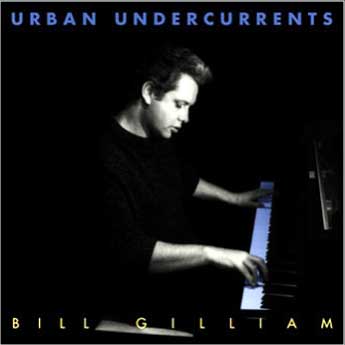
“Bill Gilliam has crafted a strong collection of songs and has an expressive way with funky pieces” Richard B Kamins, Cadence Magazine (Redwood, NY), “Urban Undercurrents” CD review Dec, 2000
“This Canadian attacks the piano with the power and rhythmic sensitivity of McCoy Tyner but uses the punch to create a style that leaps far beyond influences”
David McElfresh, Jazz Now (San Francisco, CA), “Urban Undercurrents” CD review March, 2000
“Gilliam’s music featured curious grooves, unusual contours, jolting time shifts and a frequent sense of intense four-way dialogue between performers seeking different paths to the same redemptive destination. Clearly a band to watch.” Geoff Chapman, Toronto Star, performance review Dec, 1999
“Gilliam bridges together contemporary classical composition technique with traditional jazz idioms with considerable amount of success”. Maria Knight, The Strand (Toronto), “Urban Undercurrents”CD review Sept, 1999
“Subtle and tuneful playing that ventures into interesting musical terrain while never losing touch with the core melody of each number, very pleasing stuff”
Kerry Doole, “On The Beat” Tandem Magazine, Toronto, concert review July, 1999
“Bold melodies and rhythms ….. featuring fluid improvisations by saxist Ernie Tollar”.
Dominique Denis, Toronto French newspaper L’Express, “Urban Undercurrents” CD review June, 1999
“With Gilliam’s attack strategy to the music form he should gain a solid foothold in the jazz market“. Walter Grealis, RPM magazine, “Urban Undercurrents” CD review March, 1999
“Where have you been Bill Gilliam? … A sophisticated mix of future jazz and new music that illustrates truly imaginative writing and execution”, ..”To be noted by anyone keen on imagistic music that packs a punch“. Geoff Chapman, Toronto Star “Jazz Notes”, “Urban Undercurrents” CD review March, 1999
“A very hip collection of original compositions that are constantly engaging”
Joseph Sobara, Varsity Magazine (Toronto), “Urban Undercurrents” CD review, 1999
“One of the finest performances to ever take place in the (AGO) Walker Court”.
Jim Shedden, musical director of the “All That’s Jazz” concert series at the Art Gallery of Ontario, review of the Bill Gilliam Ensemble performance in Toronto April, 1998
“Where have you been Bill Gilliam? … A sophisticated mix of future jazz and new music that illustrates truly imaginative writing and execution”, ..”To be noted by anyone keen on imagistic music that packs a punch“. Geoff Chapman, Toronto Star “Jazz Notes”, “Urban Undercurrents” CD review March, 1999
Gilliam band takes Pilot crowd on winding trip by Geoff Chapman, Jazz Critic, Toronto Star, Dec 13, 1999
Pianist Bill Gilliam may have earned his spurs creating music for movies, dance and theatre, but, remember, he emerged from Boston’s prestigious Berklee College with a degree in jazz composition as well as film scoring.
It’s the different strokes of his jazz compositions as well as their execution that makes him worth seeking out: he does not plough a straight musical furrow.
The quartet he brought to The Pilot Saturday reflected the unusual ideas he brings to the art form, with Ernie Tollar, veteran of the genre’s internecine wars, on soprano sax; excellent mainstream bassist Duncan Hopkins; and Ben Riley (son of monster organist Doug), an excitingly responsive presence on drums.
It takes confidence to face the grizzled Pilot jazz inquisitors with a program consisting entirely of your own material – much to be found on his debut indie CD release Urban Undercurrents – and there were also new tunes.
Gilliam’s music featured curious grooves, unusual contours, jolting time shifts and a frequent sense of intense four-way dialogue between performers seeking different paths to the same redemptive destination.
Thus, piano, sax and bass would ease into looping lines speedily picked up by colleagues to take elsewhere, with persistent unscripted commentary from the chattering Riley drumkit.
All this makes for fascinating listening, Tollar’s long, smooth snaky sax lines over a walking beat and then polyrhythmic pulse on “The Impasse,” typical answers to the leader’s challenging, knotty themes as Gilliam kept the band balanced on an unpredictable edge, particularly with his dark-toned, threatening comping.
The yearning “Nina’s Love” was just one creation that climaxed in ensemble excitement after florid, emotional work from Gilliam, with players taking turns to peer “outside” before returning to the broiling group stew and often with pairs of them trolling to different pulses than their comrades.
Exploratory expeditions continued through three sets, Tollar switching to alto to cruise mournfully over skittering beat on “The Richness Of Living,” where Riley’s hip accents stood out.
There were more measured structures, like the bluesy tribute to Charles Mingus, but even here as on “Pleasure” Gilliam’s elastic ideas of focus and flow dominate, with particularly ecstatic dialogues between piano and sax.
Time was also found to experiment with funk and dirge, which showed group versatility and desire for earthy experimentation, while fragmented material kept bursting into animated interaction. Clearly a band to watch.